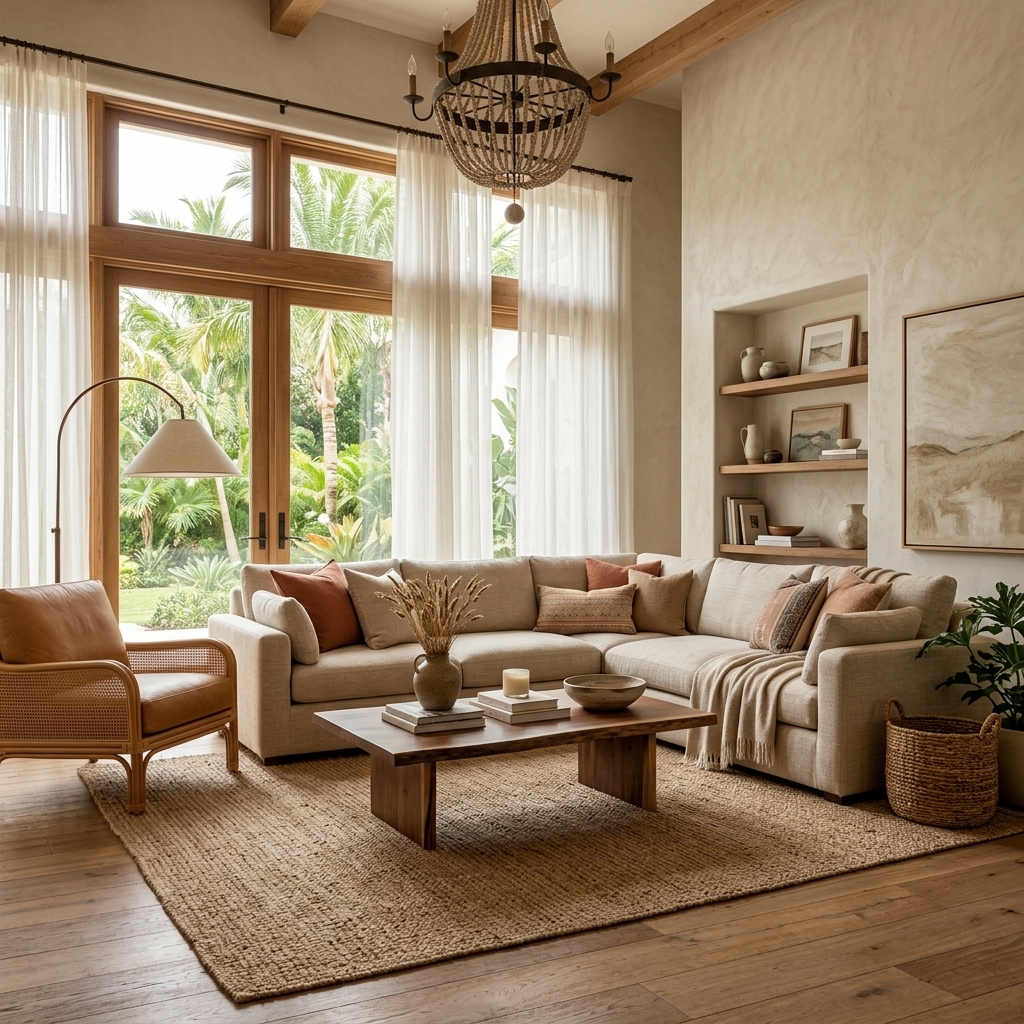
If you have ever walked into a room and felt instant peace —or, on the contrary, an inexplicable discomfort— you have already experienced what neuroarchitecture studies today: spaces shape us. It is not magic. It is applied science. And at the center of the conversation between your brain and your environment are three elements that, chosen well, can radically elevate your quality of life: color, furniture, and curtains.
At Casa Velura, we spend our days creating custom furniture, applying premium upholstery, and crafting made-to-measure curtains in Punta Cana, Bavaro, and Cap Cana. We know that color is not just aesthetics: it is an emotional regulator. So let us break down, in plain language, how color psychology can transform your home or project in the East Zone.
Color temperature: the starting point for any space
The classification of tones into warm and cool is the foundation of every conscious color strategy. Warm colors —reds, oranges, yellows, terracottas— bring energy, closeness, and dynamism. Red, for example, is a physiological stimulant that increases the desire to socialize and appetite. That is why it works so well in dining rooms and social areas of hotels in Punta Cana. But beware: in excess, it can induce anxiety.
Cool colors —blues, greens, violets— promote calm, serenity, and concentration. Blue reduces blood pressure and is the go-to choice for bedrooms, studies, and wellness centers. In our blackout curtain projects in Cap Cana, we frequently combine blue-gray fabrics with neutral walls to enhance that refuge effect.
Neutrals —white, gray, beige, sand— are the base to build on. They maximize light reflection, create visual spaciousness, and never go out of style. And sophisticated tones like black, burgundy, or navy add depth when used in details: an upholstered accent chair, a curtain border, a bed headboard.
Color as a spatial modulator
Here is a trick we use constantly in interior design projects in Bavaro and La Romana: white and light tones reflect light and make a room feel larger. In small spaces or north-facing windows, a light palette on walls and curtains can gain visual square footage.
Dark colors, on the other hand, add sophistication and mystery, but "eat" space. We do not recommend dark walls in small rooms unless you are looking for a specific intimacy effect. Instead, we suggest using them in accent furniture: a sofa upholstered in navy velvet or a charcoal linen curtain framing the window without darkening the room.
And something crucial: color changes with light. A beautiful blue at noon can feel cold under a warm bulb. That is why, when we do on-site upholstery work in Veron or Punta Cana, we always ask to evaluate samples in situ, at different times of day. Caribbean light is intense and changeable; your palette must dialogue with it, not compete.
The 60-30-10 rule: professional balance in every room
This golden rule allows you to distribute color without visual chaos:
- 60% Dominant color: usually a neutral applied to walls and floors. Sets the base atmosphere.
- 30% Secondary color: applied to medium-sized furniture, custom curtains, and rugs. Adds contrast and depth.
- 10% Accent color: the personality touch. Pillows, artwork, accessories. Here you can take risks with bolder tones.
In a villa in Cap Cana, for example, we might use sand beige as the base (60%), sage green in curtains and upholstery (30%), and terracotta in pillows and vases (10%). The result is a space that feels organic, fresh, and connected to the tropical surroundings.
Not sure where to start with your project palette?
Book a free color consultation →Texture and color: the synergy that defines luxury
A room with only smooth surfaces feels clinical. One with only rough textures feels overwhelming. Luxury lives in sensory layers. Velvet absorbs light and creates depth. Linen filters it and brings freshness. Wood adds warmth. Marble brings cold elegance.
When we design a custom curtain and pair it with an upholstered sofa in a Punta Cana project, we look for the user’s hand to want to touch. That tactile response is what turns a pretty space into a memorable one. In 2026, trends point to earthy palettes —terracotta, sage green, ochre, sand— that evoke nature and create sensory refuges from digital chaos.
Neuroarchitecture and color: designing for the brain
Neuroarchitecture proves that every stimulus in our environment generates a biochemical response. High ceilings foster abstract thinking; low ones, detailed focus. Views of nature reduce cortisol. And the right colors, in the right proportions, can improve your sleep, productivity, and mood.
At Casa Velura we do not do "decoration." We create spaces that breathe. Every color choice in an upholstery piece, every curtain drop, every wood selection for a custom piece answers one question: how do we want the person inhabiting this place to feel?
If you are in Punta Cana, Bavaro, Veron, Cap Cana, La Romana, or Santo Domingo and want your space to speak the language of conscious design, reach out. We create custom furniture, craft curtains with purpose, and apply upholstery that lasts generations. Because your space is not just what you see. It is what you feel.
A legacy in every line.